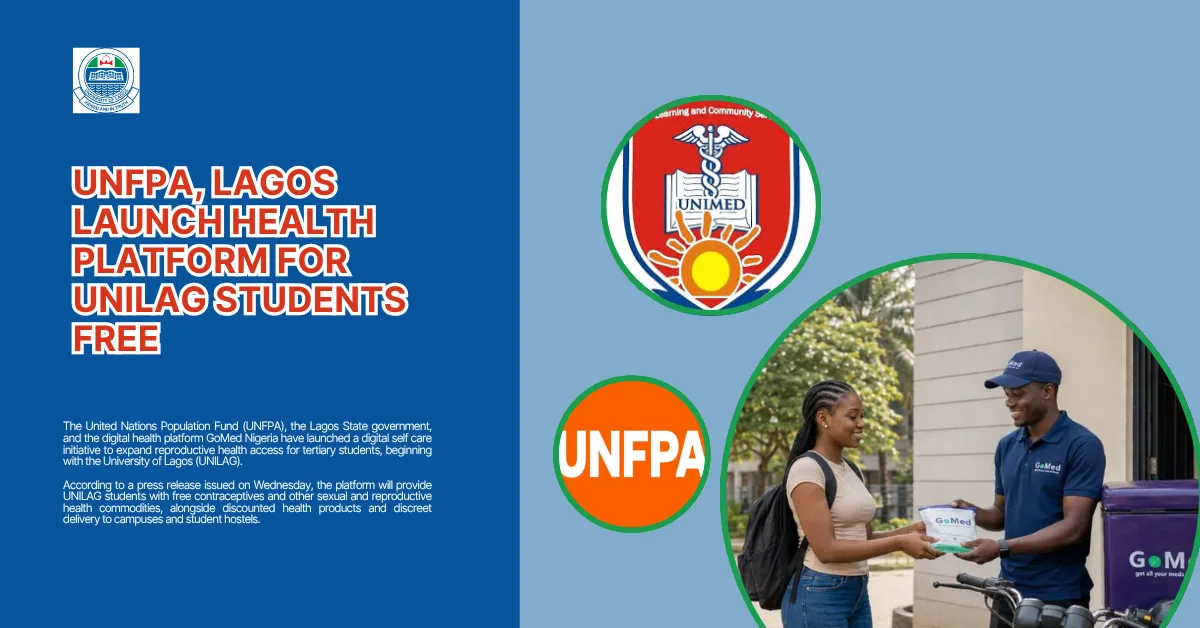
The United Nations Population Fund (UNFPA), the Lagos State government, and the digital health platform GoMed Nigeria have launched a digital self care initiative to expand reproductive health access for tertiary students, beginning with the University of Lagos (UNILAG).
According to a press release issued on Wednesday, the platform will provide UNILAG students with free contraceptives and other sexual and reproductive health commodities, alongside discounted health products and discreet delivery to campuses and student hostels.
The partners explained that the initiative is designed to tackle barriers such as cost, distance, stigma, misinformation, and confidentiality concerns, which frequently discourage young people from seeking reproductive health services. These barriers, they noted, contribute to unintended pregnancies, unsafe abortions, sexually transmitted infections, and disruptions to students' education.
A 2025 study titled "Factors Associated with Sexual and Reproductive Health Services Utilisation Among Female Students in a Nigerian Tertiary Institution," published in the African Journal of Stability and Development, similarly found that utilisation of such services among female students remained low due to structural and behavioural factors, including stigma, financial constraints, long waiting times, and confidentiality concerns.
Under the platform, GoMed disclosed that students will receive free contraceptives and other commodities supplied by the Lagos State Ministry of Health and UNFPA. Students will also be able to access sexual and reproductive health information through UNFPA's SoftLife 247 and U Plan platforms, where they can chat with qualified family planning providers, while GoMed's registered pharmacists will offer confidential guidance on medicines and other health products.
The partners stated that the initiative supports UNFPA's broader effort to address the unmet need for family planning among young people and aligns with the Lagos State government's push to reduce unintended pregnancies and sexually transmitted infections while expanding youth friendly health services.
Speaking at the launch, Chief Executive Officer of GoMed Nigeria, Anthony Edeki, explained that the platform was designed to bring trusted healthcare closer to students while protecting their privacy. "Students should be able to get reliable health information and essential products without cost, distance, or fear of judgement becoming barriers," he stated.
UNFPA Resident Representative in Nigeria, Muriel Mafico, described the partnership as central to improving access to life saving reproductive health information and commodities. "As the UN agency mandated for Sexual and Reproductive Health and Rights, we are committed to reducing preventable maternal deaths and addressing the unmet need for family planning," she disclosed, adding that the platform would help vital information "reach more people, more easily."


Leave a Reply