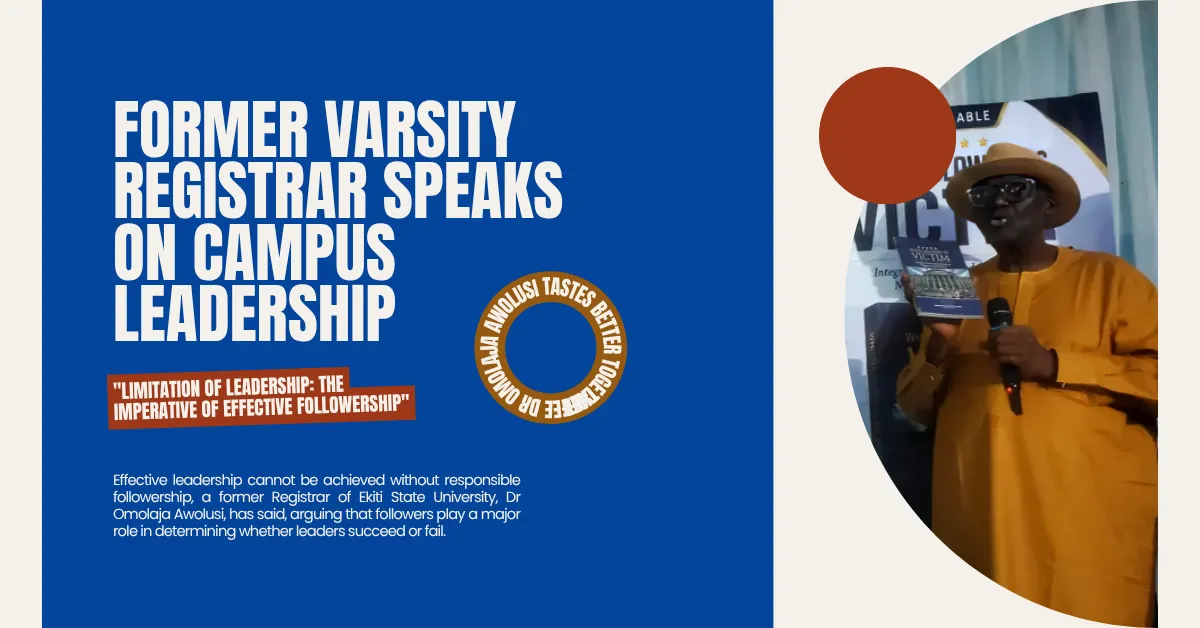
Effective leadership cannot be achieved without responsible followership, a former Registrar of Ekiti State University, Dr Omolaja Awolusi, has said, arguing that followers play a major role in determining whether leaders succeed or fail.
Awolusi made the remarks while delivering a keynote lecture titled "Limitation of Leadership: The Imperative of Effective Followership" at the public presentation of Joseph Akeju's book, Whistleblower as Victim, held in Lagos on Friday.
Drawing on examples from history and African folktales, Awolusi maintained that major empires and successful national movements were built not by leaders alone but by the people who supported and implemented their vision. He noted that Nigeria similarly needed citizens who would hold leaders accountable while also performing their own responsibilities with integrity.
The don identified corruption, dishonesty and self interest among citizens as major challenges to effective followership in Nigeria. "When stewardship is non existent, accountability will be compromised, confidence will be eroded, and eventually, economic value will be lost. Nigeria's problem is more of the Followership challenge than that of leadership deficit," he stated.
He added, "It is from the corrupt, indolent, unfaithful, disgruntled followership that electorates would emerge. The voters, immersed in greediness and neck deep in avarice, will decide for the nation, the leaders through elections. The all pervasive adoption of false measures in trade and commerce makes cheating look normal."
Awolusi urged Nigerians to become competent, honest, and responsible followers, adding that the quality of leadership in the country would ultimately reflect the values and conduct of its citizens.
In his remarks as chairman of the event, the Minister of Finance and Coordinating Minister of the Economy, Taiwo Oyedele, described the book as a reminder of the importance of integrity, courage and accountability in public service. He explained that whistleblowing should be seen as a means of protecting institutions and public resources rather than as an act of disloyalty.
Oyedele noted that public officers were often faced with difficult choices between remaining silent and speaking up when they observed wrongdoing, stressing that upholding the truth could come with personal consequences. He commended Akeju for documenting his experience, saying the book would encourage readers to reflect on their responsibilities and the role of integrity in building stronger public institutions.
The event drew goodwill messages from friends, colleagues and well wishers of the author.


Leave a Reply